Friday Poem – April

Friday Poem – April

Beautiful poems

Seren Books's avatarSeren Books Blog

This week our Friday Poem is from The Visitations by Kathryn Simmonds.
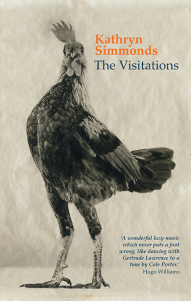
the visitations kathryn simmonds april poemThe Visitations is the follow-up to Kathryn’s Forward Prize-winning debut, Sunday at the Skin Launderette. As with her previous collection, an appealing voice prevails, though this simplicity is something of a veil, through which the author, with subtle shifts of language and perspective, manages to imply darker themes and worlds unseen. The tone is often simultaneously satirical and elegiac and the collection abounds with sudden moments of strange illumination: a lime tree strikes up a conversation; a life coach finds an old passport; an infant teeters on the brink of speech. Here are poems where the physical and metaphysical meet, where questions of new motherhood are set against those of faith, and the larger conundrum of how to live.

April
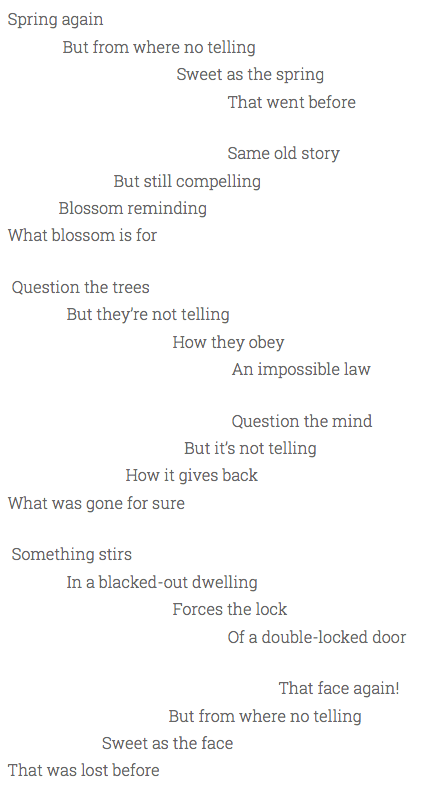
April Kathryn Simmonds

Buy your copy now.

View original post

In Memory of The Titanic #3

angelatopping's avatarAngela Topping

This first poem is by the marvellous Penelope Shuttle, who tells me a distant cousin of hers, Pearl Shuttle, failed to survive the sinking of Titanic. She was on her way to America to start a career in the vaudeville.

Mighty Ship of Pride

I built this ship

from the iron of my father’s eyes

the steel of my mother’s heart

Three million rivets

I built this ship

from the bones and the skin

the hours and the days

I built it by hand

on a 49 hour week

for pay of  two pound

I built it from tongues

of the wise and the foolish

I hammered

I wrought

How fast she grew

my ship of woe


I built this ship

from the nettles

in the yard

by the nuns’ parlour

from streets

of a stricken city

torn between pride

and grief

I built this ship

from leftover rivers

View original post 359 more words

In Memory of The Titanic

angelatopping's avatarAngela Topping

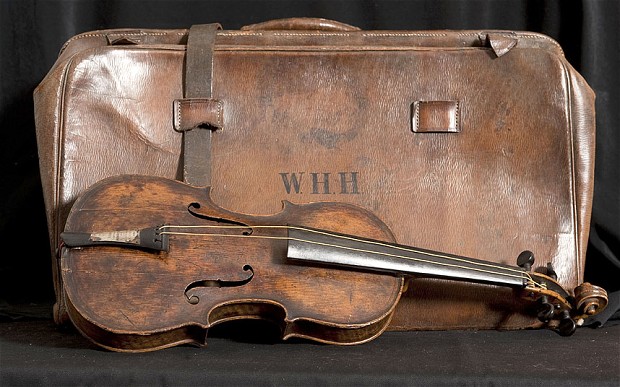
Titanic-violin_2509384b

As well as passengers, the crew and staff also lost their lives in the disaster. The courage of the musicians on the Titanic has been noted. There were two bands, but they formed together to keep passengers calm during the crisis. They were not employees of The White Star Line, and so had no rights. Not a single one survived. Their music probably saved many lives and kept up everyone’s spirits.

Poet and musician Kim Moore remembers how Wallace Hartley, band leader mentioned in my poem yesterday, was found with his violin strapped to his back. Many thanks to Kim, whose excellent blog you can find from the link to the right.

Wallace Hartley

And when he was found, still in his uniform,
his violin strapped to his back, people began
to remember the way he’d played each night,
not just the last, the dip and turn of his shoulders

View original post 233 more words

In Memory of The Titanic

angelatopping's avatarAngela Topping

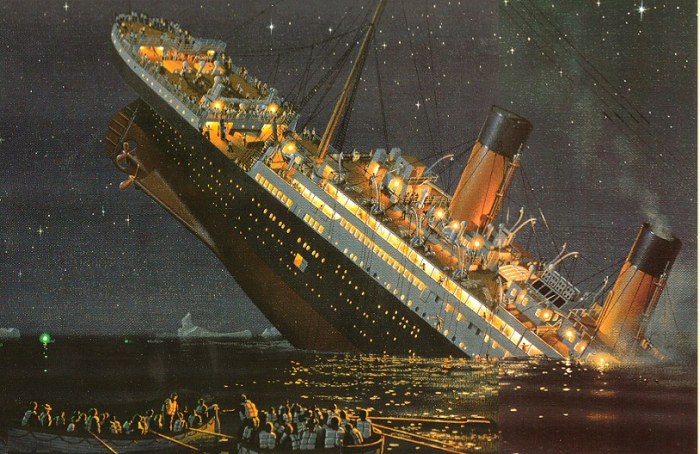
305873_titanic_jpgb6dda7e099d12da901287e26c19035f2The sinking of The Titanic on her maiden voyage in 1912 continues to fascinate people. The story unfolds like a Greek tragedy and has been the subject of many poems, both at the time and since. The ship sank 104 years ago and laws were changed afterwards, such as enough lifeboats for everyone. The worst casualties were among third class passengers setting off for a new life in America, many of them Irish. Cruelly, women and children were split from husbands and fathers by the old rule ‘women and children first’, even where there was room in the lifeboats. Abigail Wyatt writes about the widows of the Titanic. 

Over the next few days, I will be featuring some contemporary poems and prose pieces about it. Thanks are due to their authors for allowing me to publish their work.

Atlantic Widows

We come to it in our different ways – just…

View original post 417 more words

Off to Work Whistling

sallyevans35's avatarkeeppoemsalive

People do the most amazing things. They become concubines. They learn to live with their fate. They go to work. They sit in the wood. And when these things get into poems… the ones who sit in the wood turn into trees. Geraldine Green’s poem All Day ISit in the Woods, and Jennifer A. McGowan’s Pharaoh’s Concubine, bring us these particular insights into people and their surroundings through poetry.

In The Work Ethic, Democracy tries to go to work.  In new guidance from our not very caring State, I have this week learned that the sick note has now been renamed the fit note. Think on this, Owen Gallagher of The Work Ethic.

Nothing is too strange to happen in narrative, and narrative poetry. Some of the stories become myths. We finish with a narrating of a myth in Rayne Mackinnon’s poem Orpheus, in which…

View original post 984 more words

How to deal with rejections

angelatopping's avatarAngela Topping

Carol Ann Duffy allegedly used them to paper her smallest room. But that’s not so easy these days when so many of them come by email.
I used to save all my handwritten ones, together with the poems I’d sent out, but life’s too short to do that. In the past, editors like Peter Mortimer, of the long defunct Iron magazine, used to type feedback letters and tell the poet what he liked and didn’t like about the poems. Very few editors these days have the time and energy for that, because so many more people are submitting poetry. Bless the ones who do!

Many rejections take the form of a standard letter, offering generic advice. Sometimes they can come across as patronising, especially to people who have been submitting poetry, with both positive and negative results for many years. One size never fits all, and I would urge editors…

View original post 632 more words

The undulations of the poet

Very true

roymarshall's avatarRoy Marshall

A friend recently wrote to compliment me on a poem of mine he’d seen in a magazine. It is always lovely to receive positive responses to work,  either from people I know or from those I have yet to meet.

The rest of my friend’s e-mail explained that, with regard to his own work (he is a fine and highly productive poet)  he was feeling rather low since there was no prospect of publication of his pamphlet on the horizon.  My friend’s predicament is not unusual. There are many poets, some of whom have in fact achieved a great deal of ‘success’  who feel lost and ignored. It is easy to dismiss this as indulgence, but people who make art of any kind are susceptible to dips in self-esteem brought about by perceived invisibility or worse, ‘failure’.

Aspects of what might be termed modern ‘competition culture’ might contribute to feelings…

View original post 448 more words