
Camden Poetry hosted an evening for IDP poets
Caroline Maldonado & Mandy Pannett read from their new collections with Carolyn O’Connell 
Camden Poetry hosted an evening for IDP poets
Caroline Maldonado & Mandy Pannett read from their new collections with Carolyn O’Connell
This is a lovely collection and great collaboration. congratulations to Angela & Sarah
A week today, the poetry pamphlet Sarah James and I have collaborated on will be launched in a special reading at Cheltenham Poetry Festival. It is the first in a new series of Poetry Duets, to be published by Mother’s MIlk Books. Hearth is themed around the idea of using objects to write about family life, memory and how these affect the way we see the world.
Apart from the opening and closing poems, which are wholly collaborative, the rest of the poems are paired. Either I wrote a new poem to go with one Sarah sent me, or she wrote one in response to mine. It was uncanny how close we were at times in the objects which had significance, although we are from different regions and of different ages.
The collaboration culminated in a very enjoyable visit from Sarah. We worked for two days to go through all…
View original post 234 more words
Beautiful
Love For Me
There is a love for me
A love wrapped in old prayer
A love tucked in my lungs like breath
There is a love I was pulled from
A dust of stories
A wind of rapture
A cunning song that leads the darkest night to its dawn
Love
Crowds my tongue
It weaves a new language
It carries itself in the scent of a new day
.
.
.
Thato Angela Chuma is a Motswana singer, poet and writer. Her poetry has featured in literary magazines such as Saraba Magazine, Brittle Paper, Strange Horizons and The Kalahari Review.
Geat advice
I wrote a few thoughts on drafting and re-drafting poems last night. I redrafted my thoughts today. This is only a draft.
1. Does the opening line invite the reader to read the poem? Is it compelling? Is it hard to understand? If so, will it repel the reader? Do you need the first line? The first stanza? Half of the second stanza? Delete until you are left with the poem. Or not, in which case it probably wasn’t meant to be a poem.
2. Have you read the poem aloud? Does it sound ‘right’? Is it hard to read? Where do the line breaks naturally fall? Do you want to subvert this, and if so, to what purpose? What’s the white space doing? What shape best serves the poem?
3. Do you need to put the poem away until you can see it more clearly? Come back tomorrow. Or next year. If you are…
View original post 456 more words
The Spring edition of Poetry News (the newspaper of the UK Poetry Society) features an article by Robin Houghton about blogging based on interviews with seven poets who also write blogs- Sarah Westcott, Abegail Morley, Josephine Corcoran, John Field, Anthony Wilson, George Szirtes and me.
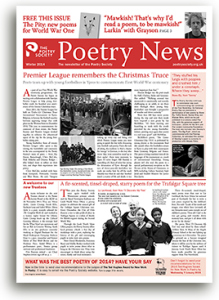
Winter 2014 copy of Poetry News
Robin has selected poet bloggers who use their posts for a variety of reasons and she’s done a good job of collating the answers. Here are a few reasons the interviewees have given to the question ‘why blog?’
George Szirtes says it is a “space to work out some thoughts.. to act as something of a diary…to talk about poets I like.”
John Field writes ‘intelligent, in-depth poetry book reviews’ because he feels poetry is “poorly represented” and that his reviews give exposure that might lead to book sales.
I’m sure most people reading this will have, at some…
View original post 232 more words
Good Collection
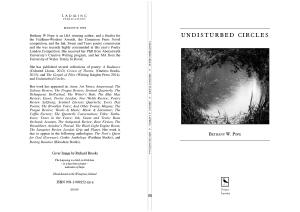
I am pleased to announce the publication of my third full collection, Undisturbed Circles. It’s composed of a series of double-acrostic sonnet crowns. The acrostics run down the left hand margin of each sonnet, and continue down the right, adding another layer of complexity to the narrative.
If that’s not confusing enough, here is the Form Key:
Forward and Form Key
Fox Cycle is a traditional sonnet crown; adorned with a continuous double-acrostic that runs down the left and right margins of each sonnet and which, taken together, form another poem. It details the life of a vixen as she (being trickster) slips between the world of the living and the world of the dead.
The Labyrinth is a heroic sonnet crown. This piece is technically intricate. Each sonnet is prefaced by a brief narrative prose-poem that I used to set the tone for the grouping. The sonnets themselves…
View original post 731 more words
Boiling a Frog
It’s lovely here in the cauldron.
When the sun rose, I saw the water,
the blue green ripples, on the stove
leapt straight in.
Now I float on my back, inflate/deflate my belly.
I croak in Ribbet Ribbet glee.
Bubbles begin to rise
burst slow against my skin.
Actually it’s getting warm in here.
Relaxing, I suppose, but just a bit
uncomfortable and hot. Steam rises,
spirals into air.
I see a face appear, look down at me,
sharpen a knife, prepare to spear me
with a fork, slice me into
tasty well-cooked morsels.
Susan Castillo Street is a Louisiana expatriate and academic who lives in the Sussex countryside. She is Harriet Beecher Stowe Professor Emeritus, King’s College, University of London, and has published a book of poems titled The Candlewoman’s Trade (Diehard Press, 2003). Her second collection, Abiding Chemistry, is forthcoming later this spring from Aldrich Press. …
View original post 44 more words
Last Friday went to wonderful reading of IDP poets at Camden Poetry. Fabulous readings by Caroline Maldonado and Mandy Pannet who is an FB friend, very welcoming and supportive, also had opportunity to read from Timelines available from Indigo Dreams http://www.indigodreams.co.uk/bookshop to a new audience.
Unfortunately missed Ruth who is in Portugal doing stirling work but thanks to Adel who stepped into the breach.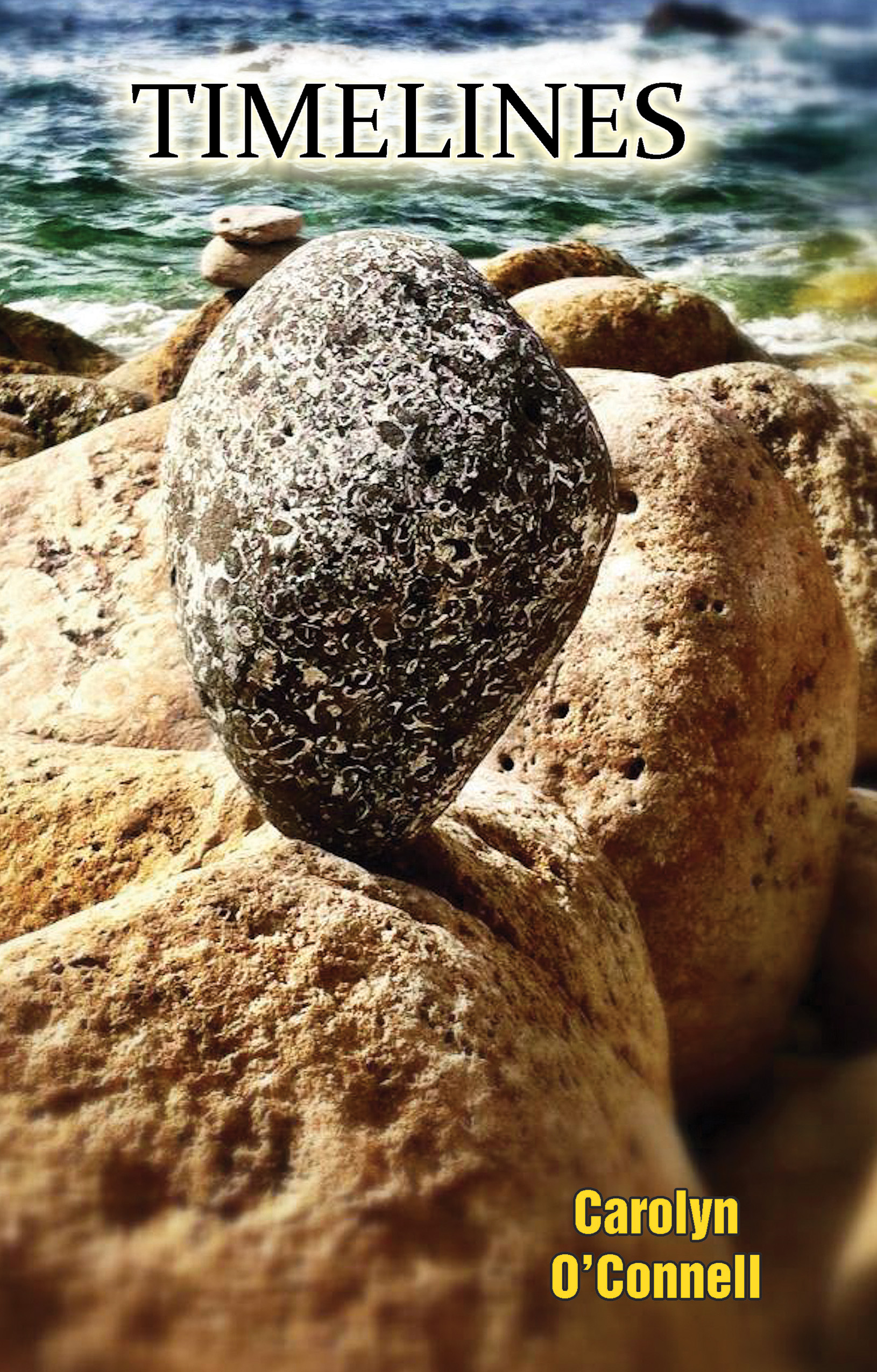
Definetly agree
Here’s what our education secretary said recently at a conference to promote science and technology learning. Here’s my reply.
I left school in 1986. I did two humanities degrees. Jobs, as you may recall, were not thick on the ground. I did a business course first, not because I wanted to but because, oddly enough, I didn’t know what else to do. I thought it would give me a solid, useful career in which I could contribute to the national economy and make my father happy.
Then I came to my senses. I ran away from the business course, which made me want to kill myself and a number of other people, and did two humanities degrees. I spent eighteen happy, poorly-paid years in archaeology. My specialist field was – as it happens – the archaeology of industry, and particularly of mining, which was so vital…
View original post 905 more words


 Carolyn O' Connell